

Most business owners wait for the "perfect moment" to sell.
That moment never comes.
Instead, you're left watching market conditions shift while your business either gains or loses value based on factors you didn't see coming. Right now, in early 2026, Birmingham and Mobile present a specific kind of opportunity: one that won't look the same six months from now.
Here's what you need to know about selling in Alabama's two largest metros this year.
The Market Reality in Q1 2026
Alabama's Business Confidence Index sits at 51.7 for the first quarter of 2026. That's down 1.9 points from last quarter.
What does that actually mean?
It means business leaders across the state expect expansion, but they're more cautious than they were three months ago. The optimism is still there: anything above 50 signals growth expectations: but the enthusiasm has cooled.

This creates an interesting dynamic for sellers. You're not in a panic market. You're not in an overheated market either. You're in a rational market where serious buyers are still active, but they're being selective.
The component breakdown tells you more:
Industry sales remain moderately confident at 56.2. Buyers expect businesses to continue generating revenue. That's good news if your financials are clean.
Industry profits mirror that at 56.2. Buyers aren't just looking for top-line growth: they're willing to pay for actual profitability.
Industry hiring drops to 44.8. This is the cautionary signal. Businesses expect to pull back slightly on new hires, which means they're watching costs more carefully than they were last year.
The U.S. economy outlook sits at 49.0: technically contractionary, but significantly improved from recent quarters.
What this means for you: buyers are in the market, but they're focused on fundamentally sound businesses with demonstrable profit, not potential.
Where Birmingham and Mobile Show Strength
Not all sectors are created equal right now.
Some industries in the Birmingham-Mobile corridor are positioned significantly better than others heading into 2026. If you're selling, knowing where the momentum sits matters.
Food and beverage businesses continue to see strong fundamentals. The region has attracted over $1 billion in capital investment in this sector over the past five years, creating over 1,300 jobs. Buyers recognize Alabama's manufacturing and distribution advantages here.
Technology companies: particularly software and IT services: have grown 3.5% over five years, with software publishers expanding 26.6%. Tech workers in Birmingham earn an average of $97,000, indicating a mature talent market that supports sustainable businesses.
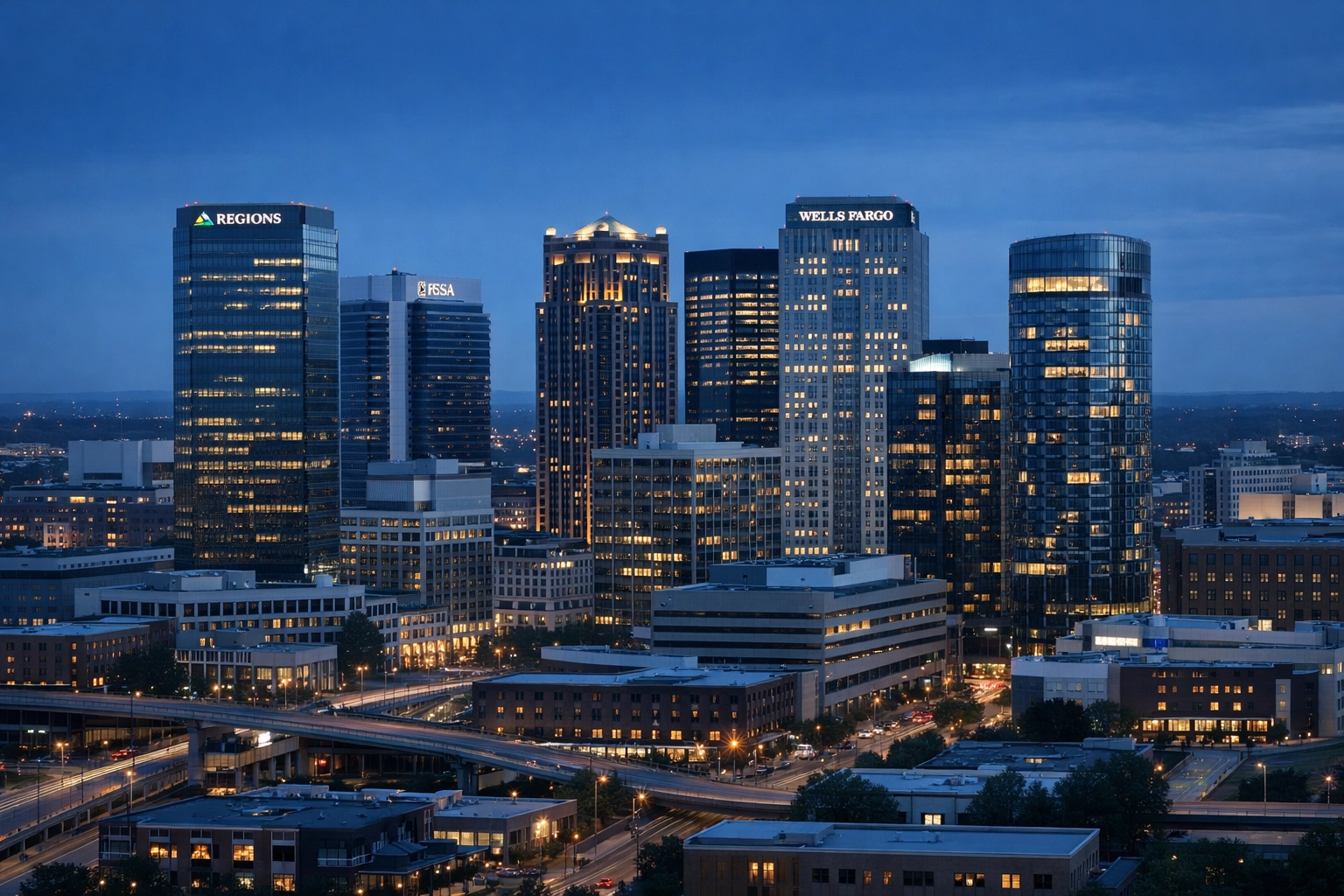
Logistics and distribution operations remain hot. Since 2018, major players like Amazon, Carvana, Lowe's, and FedEx Ground have generated over 2,800 jobs and invested more than $670 million in the region. Industrial space absorption hit 282,593 square feet in Q4 2025 alone.
If you're in one of these sectors, you're selling into demand.
Manufacturing and industrial businesses with nearly 200 advanced materials and manufacturing firms in the area benefit from an established supply chain ecosystem. Buyers looking for turnkey operations find appeal in businesses already connected to these networks.
The office-based service sector presents more complexity. The office market shows mixed signals as 2026 begins. If your business requires significant office infrastructure, you'll need to address how you're adapting to changing workplace expectations.
What Buyers Actually Care About Right Now
Here's what I'm seeing with buyers active in Birmingham and Mobile markets right now.
They're not looking for projects. They're looking for performance.
Specifically, buyers are focused on:
Documented profit, not adjusted EBITDA that requires explanation. If your financials need a 20-minute walkthrough to make sense, you've already lost momentum in negotiations.
Customer concentration that doesn't create single-point failure. Any business deriving more than 30% of revenue from a single customer faces valuation pressure.
Operational systems that don't depend entirely on the owner. Buyers want to see that the business continues functioning if you take a two-week vacation.
Employee stability in key positions. In a market where hiring expectations are moderating, buyers don't want to inherit immediate staffing challenges.
Clean books that have been professionally maintained. This isn't optional anymore.
The theme across all of these: transferability. Buyers are paying for businesses they can actually operate, not concepts they need to rebuild.
The Succession Conversation Nobody's Having
Employee ownership represents one of the most underutilized exit strategies in Alabama.
For Birmingham and Mobile business owners concerned about maintaining local jobs and preserving company culture, Employee Stock Ownership Plans (ESOPs) offer a legitimate succession path that keeps the business rooted in the community.
This matters more than most owners realize.
When you sell to a strategic buyer or private equity group, they're bringing their own vision for the business. Sometimes that aligns with what you built. Sometimes it doesn't.
Employee ownership lets you:
- Maintain the legacy you spent decades building
- Keep jobs local rather than seeing them relocated or eliminated in consolidation
- Potentially receive favorable tax treatment compared to traditional sales
- Structure a transition that doesn't require immediate, complete separation
I'm not suggesting this is the right path for everyone. But if you've dismissed it without serious consideration, you're potentially leaving a valuable option off the table.
Timing Considerations for 2026
Let me be direct about timing.
The confidence index declining 1.9 points quarter-over-quarter isn't catastrophic. But it's a signal. Business leaders are becoming more cautious, not less.
That caution translates into:
Longer due diligence periods as buyers scrutinize more carefully
Tighter financing conditions as lenders apply stricter standards
Lower valuation multiples for businesses with any operational red flags
Fewer speculative buyers willing to pay premium prices for potential
If you've been considering a sale, waiting for conditions to improve may not be the strategic move. You're operating in a moderately optimistic environment now. That could look meaningfully different by Q3 or Q4.
The businesses that will command premium valuations in this environment are the ones that:
- Show consistent profitability over multiple years
- Have documented systems and processes
- Demonstrate customer and revenue diversity
- Maintain clean, auditable financials
- Present minimal owner dependency
If that describes your business, the market is receptive right now.
If it doesn't describe your business, you have work to do before you'll get the number you want.

What the Numbers Don't Tell You
Market data provides context. It doesn't provide answers specific to your situation.
The Alabama Business Confidence Index tells you what business leaders expect. It doesn't tell you what your specific business is worth or how long it will take to sell.
Sector growth statistics indicate where investment is flowing. They don't guarantee a buyer for your particular company.
Regional economic indicators show macro trends. They don't address the specific challenges in your P&L.
This is where most owners get stuck.
They read market reports, they talk to colleagues who sold businesses, they make assumptions based on what they hear at Chamber events. And they base major financial decisions on incomplete information.
Here's what actually matters: your business's readiness to sell, not just the market's readiness to buy.
I've seen businesses sell in difficult markets because the owner prepared properly. I've seen businesses languish in strong markets because the fundamentals weren't there.
The market creates opportunity. Preparation captures it.
The Mobile Difference
Mobile's economy functions differently than Birmingham's in meaningful ways.
The Port of Mobile creates unique opportunities for logistics, shipping, and manufacturing businesses. Companies connected to port operations often attract buyers specifically looking for that infrastructure access.
Aerospace and defense sectors maintain strong presence in Mobile, supported by major employers like Airbus and related supply chains. Businesses serving these industries benefit from relatively stable government and commercial contracts.
Tourism and hospitality businesses in Mobile face different dynamics than Birmingham counterparts, driven by Gulf Coast proximity and seasonal visitor patterns.
If you're selling a Mobile business, highlighting these regional advantages matters to buyers evaluating between Alabama markets or considering the broader Gulf Coast region.
What Happens Next
You have three realistic paths forward.
First, you can wait and hope market conditions improve. That's a gamble. Business confidence is declining, not rising. Waiting might cost you opportunity.
Second, you can move forward unprepared and accept whatever the market offers. You'll likely leave significant value on the table and face a longer, more frustrating process than necessary.
Third, you can get clarity on where you actually stand. What's your business worth in today's market? What would it take to maximize that value? How long would a realistic sale process take?
That third option costs you nothing but time.
Most owners avoid it because they're afraid of the answer. But clarity: even uncomfortable clarity: gives you control over what happens next.
If you want to understand what selling your Birmingham or Mobile business actually looks like in 2026, start with knowing your number. Not the number you hope for. The number the market will actually support.
From there, everything else becomes a decision, not a guess.
Looking for clarity on your business value and exit options? Business Broker Alabama helps owners in Birmingham, Mobile, and across the state navigate the sale process with realistic expectations and proven strategies.
Visit Vision Fox to learn more about our approach, or explore our Mobile, Alabama services to see how we support business owners across the Gulf Coast region.