

Most business owners I talk to think they’ve missed the window.
They look at the news and see talk of tighter margins. They see reports about 4% cost increases due to tariffs. They see the labor shortage and think, "Who would want to buy this headache?"
The assumption is that a difficult market makes a business less valuable.
It doesn't.
In fact, for service and construction companies in Alabama right now, the opposite is true. The complexity of the current market is exactly why buyers are lining up with capital.
If you own a plumbing, HVAC, electrical, or general contracting firm in this state, you aren't just owning a company. You’re holding a scarce asset in a high-growth corridor.
And 2026 is proving to be the year where that scarcity meets record-level demand.
The Infrastructure Surge
Alabama is currently in the middle of a massive private-sector construction boom.
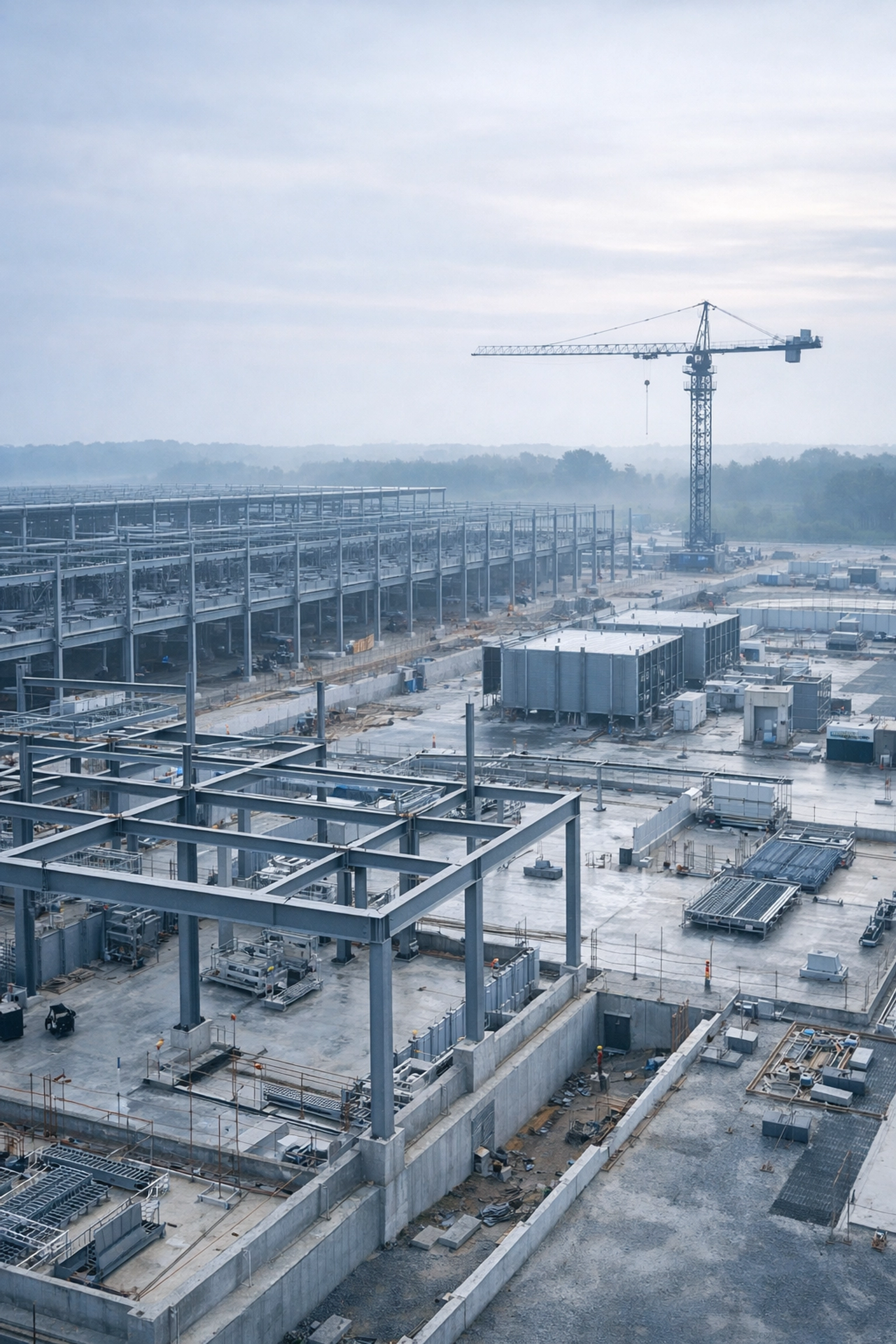
We aren't just talking about a few new housing developments. We are seeing a fundamental shift in how the state’s economy is powered. Data centers, advanced power facilities, and healthcare hubs are driving the market.
These aren't "maybe" projects. These are massive, capital-intensive builds that require specialized local expertise.
Buyers are looking for companies that already have the footprints in these sectors. They don't want to start from scratch. They want to buy your relationships. They want your safety ratings.
And they want your contracts.
In cities like Huntsville, the growth is almost hard to keep up with. When a large out-of-state entity looks to enter the Alabama market, they don't look for land. They look for a bridge.
Your business is that bridge.
The Labor Paradox
I hear it every day. "Mike, I can't find enough good people."
It’s true. Alabama is seeing over 2,875 construction job openings every year. The Bureau of Labor Statistics shows that employment growth in this sector is moving faster than the national average.
Most owners see this as a reason to stay small or a reason to be frustrated.
But look at it through the eyes of a buyer.
If it is nearly impossible to find and train a skilled crew, then a business that already has a crew is worth a premium.
Buyers aren't just buying your revenue. They are buying your workforce. They are buying the fact that you’ve already solved the hardest problem in the industry.
In 2026, "human capital" isn't a buzzword. It is the primary driver of business valuations. If you have ten guys who show up on time and know their trade, you have something that a larger firm is willing to pay a massive multiple for.
They can't recruit those people easily. But they can buy them by buying you.
Where the Demand is Concentrated
The demand isn't uniform across the state. We are seeing specific clusters where the activity is concentrated.
In Birmingham, the focus is on healthcare and institutional maintenance. The aging infrastructure of the city’s core requires constant service work.
Down in Mobile, the maritime and industrial sectors are pushing demand for specialized mechanical and electrical contractors.
And then there is Montgomery. The public-sector construction might be cooling slightly as budgets tighten, but the private industrial sector is picking up the slack.
If your business operates in these hubs, you are in the crosshairs of private equity firms and strategic buyers. They aren't just looking for profitability. They are looking for "territory."
They want to own the Alabama market, and they know that the window to buy in at a reasonable price is closing.
The Service Sector Moat
Construction is one side of the coin. The other is the service industry.
HVAC, plumbing, and restoration services are what we call "recession-resilient."
People might put off building a new deck when the economy feels shaky. But they won't put off fixing a burst pipe or a broken AC unit in the middle of a July heatwave in Alabama.
Buyers love this predictability.
They are moving away from speculative investments and moving toward "essential" services. They want the recurring revenue of maintenance contracts. They want the steady call volume of a 20-year-old brand.
But there’s a catch.
Most owners in Alabama don't realize what their service business is actually worth. They look at their bank account instead of their EBITDA.
This is why business valuations matter more than most owners realize. You might think your business is worth the value of your trucks and tools.
It isn't.
It’s worth the future cash flow that a buyer can expect to see once you’re gone. In 2026, those cash flows are looking very strong.

The Shift in Buyer Behavior
We are seeing a new type of buyer in 2026.
They are more disciplined. They are focused on risk management. They are asking harder questions about your supply chain and how you’ve handled the 2-4% cost increases from recent tariffs.
They aren't looking for a "fixer-upper."
They want a "turn-key" operation.
If your books are a mess or your processes are all stored in your head, you are leaving money on the table. Control over timing. Control over preparation. Control over documentation.
This is how you win in this market.
I’ve seen it again and again. Two businesses with the same revenue can sell for completely different prices. The difference? The one that sold for more was the one where the owner could step away and the machines kept humming.
Why Not Wait?
It’s a fair question. If demand is high, why not wait until 2027 or 2028?
The answer lies in the "mixed conditions" we are seeing. While demand is high, the cost of capital is still a factor. We are in a sweet spot where buyers still have the appetite, but the state’s growth hasn't reached its saturation point yet.
There is also the personal factor.
Most owners tell themselves they’ll sell "when things get easier."
Things rarely get easier. They just change.
If you wait until the next economic dip, your valuation will take a hit, regardless of how good your team is. If you wait until you’re burnt out, you’ll lose your leverage in negotiations.
Selling a business is about timing the market, yes. But it’s also about timing your life.

Taking the First Step
You don't need to be ready to sell today to start thinking about it.
Most of the successful exits I’ve managed started with a simple conversation about what the business is actually worth. Not a guess. Not a "feeling." A real valuation request.
Knowing your number gives you power.
If the number is higher than you thought, you might decide to exit now and enjoy the fruits of your labor.
If the number is lower, you now have a roadmap of what to fix over the next twelve months to get it where you want it to be.
Alabama is the place to be in 2026. The construction and service sectors are the backbone of the state's growth.
But you only get to sell your life’s work once.
Make sure you do it when the demand is high and the leverage is yours.
If you're curious about where your business stands in the current Alabama market, we should talk. No pressure. No sales pitch. Just clarity.
You can reach out to us at Business Broker Alabama to start that conversation.
Whether you’re in Decatur, Dothan, or Florence, the market is moving.
Don't wait until the window closes to find out what was on the other side.