

Most Alabama HVAC and plumbing business owners think about their exit price as a "number."
They look at their bank account, their mortgage, and their retirement goals. They come up with a figure that feels right.
But the market doesn't care about your retirement goals.
The market cares about risk, transition, and cash flow.
If you are running a service business in Birmingham, Mobile, or Huntsville, you are sitting on a valuable asset. But there is a massive gap between a business that provides a job for the owner and a business that provides an investment for a buyer.
Closing that gap is how you maximize your value in 2026.
The Reality of the Alabama Market
The home services sector in Alabama is currently seeing high demand.
We see private equity groups and individual investors looking for stable, "recession-proof" companies. HVAC and plumbing fit that description perfectly. People will always need air conditioning in a Montgomery summer. They will always need working pipes.
However, many owners wait too long to sell.
They wait until they are burnt out. They wait until they are tired of managing technicians or dealing with midnight emergency calls.
By the time they are ready to walk away, the business has often started to plateau or decline.
The best time to sell is when you have "gas in the tank." Buyers pay for potential: not just for what you did five years ago.
The "Holy Grail" of Value: Recurring Revenue
In the world of HVAC and plumbing, not all revenue is created equal.
If your business relies entirely on "broken-pipe" calls or emergency AC repairs, your value is limited. You are starting at zero every single month.
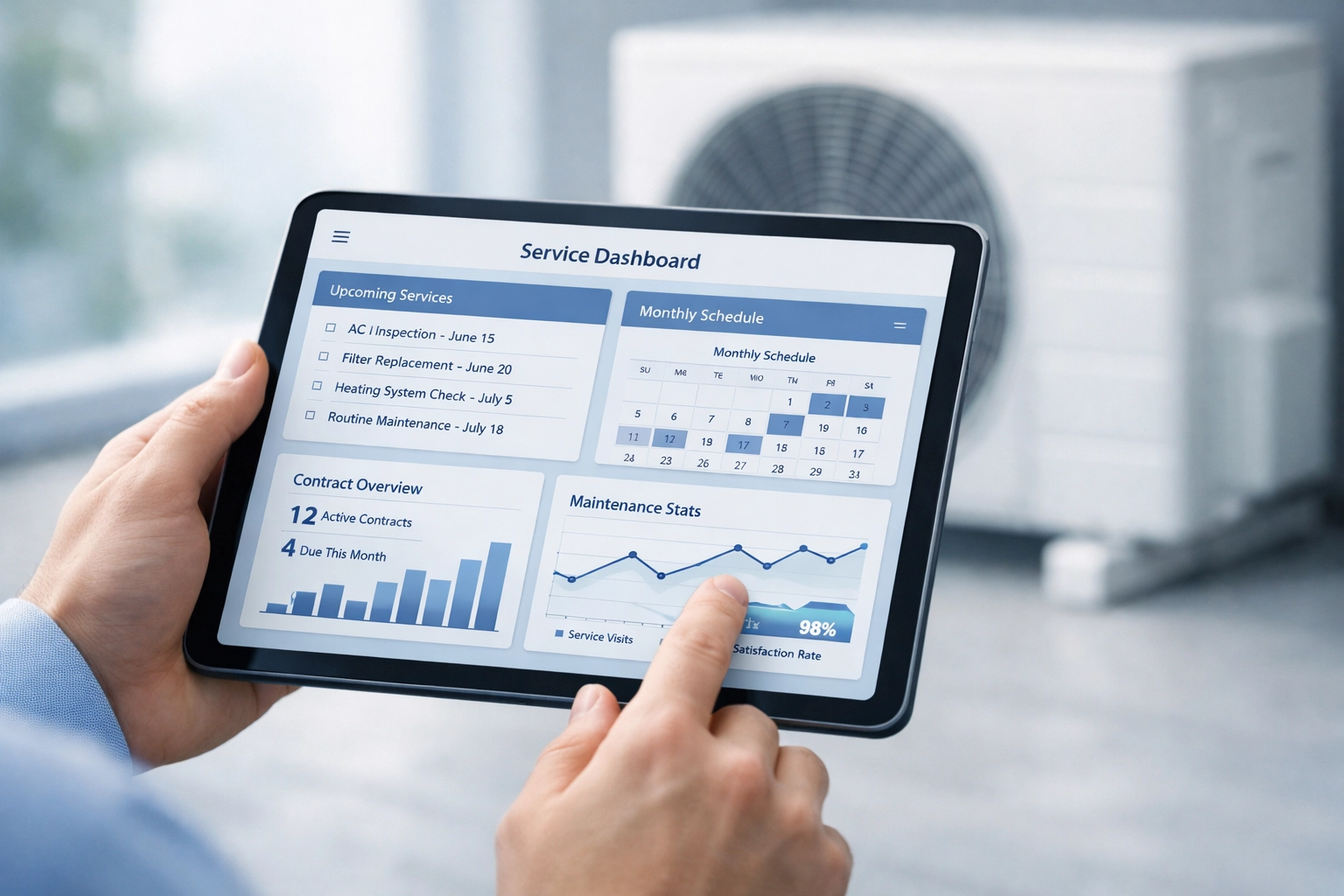
Buyers in 2026 are looking for maintenance contracts.
They want to see service agreements that guarantee a technician gets into a customer’s home twice a year. These contracts represent a predictable future. They represent a relationship that a competitor can’t easily steal.
If 30% of your revenue comes from recurring service agreements, your business is significantly more valuable than a competitor with the same top-line revenue but zero contracts.
Why Clean Books Equal High Multiples
I see it every week. A profitable Alabama business has "messy" financials.
Maybe you run personal expenses through the company. Maybe your inventory tracking is "in your head."
When a buyer looks at your business, they are performing a risk assessment. If your financial records are disorganized, the buyer assumes the rest of the business is disorganized too.
And risk lowers the price.
You need to prepare:
- Profit and Loss statements for the last three years.
- A clear list of company debts and receivables.
- Add-backs (owner’s salary, personal perks, one-time expenses) clearly documented.
Why business valuations matter more than most owners realize is because the "number" is based on verifiable data, not just tax returns.
The Owner Dependency Trap
If you are the lead technician, the primary estimator, and the only person who knows how to talk to your biggest clients: you don't have a business.
You have a job.
Buyers are terrified of "owner-dependent" businesses. They wonder what happens the day after you hand over the keys. Does the phone stop ringing. Does the staff quit.
To get maximum value, you need to prove the business can run without you.
This means having a service manager in place. It means having documented processes for how calls are handled, how parts are ordered, and how jobs are bid.
Is your Alabama business too owner-dependent? This single factor is often the difference between a quick sale and a business that sits on the market for years.
Your Technicians Are Your Greatest Asset
In Alabama, the skilled labor shortage is a constant conversation.
A buyer isn't just buying your trucks and your customer list. They are buying your team.
If you have a high turnover rate, it’s a red flag. If you have "superstar" techs who have been with you for a decade, that is a massive value driver.
Be prepared to discuss your tech retention strategy.
- How are they paid.
- What is the culture like.
- Do they have the right certifications.
Keep in mind that confidentiality is key here. If your techs find out you are selling before the deal is done, they might get nervous and look for other jobs.
Losing two lead techs during the due diligence phase can kill a deal instantly.
Location Matters: From Mobile to Huntsville
Alabama is not a monolithic market.
A plumbing business in Huntsville is valued differently than one in Mobile. The growth in North Alabama: driven by the aerospace and tech sectors: creates a different buyer profile than the coastal economy of South Alabama.
Buyers look at your service territory. They look at the demographics of your customers.
Are you in a high-growth area with new construction? Or are you in an established neighborhood with older homes that require constant maintenance?
Both have value, but they appeal to different types of buyers. Understanding your local market dynamics is essential for a realistic valuation.
Selling your Birmingham or Mobile business requires knowing who the local players are and what they are willing to pay for market share.

The Danger of Handling It Alone
You are an expert at HVAC or plumbing. You know how to fix a complex system or manage a large-scale installation.
Selling a business is a different skill set entirely.
Most owners who try to sell "For Sale By Owner" make three critical mistakes:
- They price it wrong (usually too high based on emotion, or too low because they don't know the market).
- They fail to maintain confidentiality.
- They get "deal fatigue" and let the business performance slip during the months-long negotiation process.
A specialized broker handles the "blind profile" marketing, the buyer vetting, and the negotiation of the deal structure.
This includes things like seller financing. Seller financing in Alabama is often the "secret weapon" that gets a deal over the finish line while actually putting more money in your pocket over time through interest.
What 2026 Buyers Are Actually Looking For
As we move through 2026, the buyer pool has become more sophisticated.
They aren't just looking at your revenue. They are looking at your "tech stack."
- Are you using modern dispatch software.
- Do you have a strong online reputation (Google Reviews matter).
- Is your fleet well-maintained or is it a liability.
They want a "turnkey" operation. The more work a buyer has to do to modernize your systems, the less they will pay for the privilege of doing it.
Selling a business in Alabama in 2026 involves showing that your business is ready for the next decade, not stuck in the last one.
Moving Toward the Exit
Selling your business is likely the most significant financial event of your life.
It represents years: maybe decades: of hard work, late nights, and stress. You owe it to yourself to get the full value for that effort.
Don't wait until you're exhausted to start the process.
Start by getting a clear picture of what your business is worth today. Not what you think it's worth, but what the market says it's worth.
This clarity allows you to make strategic decisions. Maybe you spend the next twelve months focused on building up your maintenance contracts. Maybe you hire that service manager you've been putting off.
These small shifts can add six figures to your final sale price.
If you are ready to see where your Alabama HVAC or plumbing business stands, let's talk. No pressure, just a conversation about where you are and where you want to go.