

The number feels heavy.
Not because it is high. Not because it is low. But because it feels uncertain.
Most franchise owners in Alabama spend years building a service business: whether it is HVAC in Huntsville, residential cleaning in Birmingham, or pest control in Mobile: only to realize they have no idea what it is actually worth to a buyer.
They look at the corporate franchise materials. They talk to other franchisees at the annual convention. They might even check a few online calculators.
But the market does not care about what your neighbor’s franchise sold for in Ohio. It does not care about the "potential" the franchisor promised you when you signed the agreement ten years ago.
The market cares about one thing: transferable, predictable cash flow.
Valuing a service-based franchise is a different beast than valuing a stand-alone independent business. You have the benefit of a brand, but you also have the burden of a franchise agreement.
Understanding where those two forces meet is how you find your true exit price.
The Reality of "Earnings"
When we talk about value, we usually start with earnings. But "earnings" is a slippery term.
Most owners tell themselves their business is profitable because they have a healthy bank balance at the end of the month. But for a buyer: and more importantly, for a lender: we have to look at Seller’s Discretionary Earnings (SDE) or EBITDA.
For most service-based franchises in Alabama, we focus on SDE.
This is your net profit before taxes and interest, with one major addition: your own compensation. We add back your salary, your health insurance, your 401k contributions, and those "discretionary" expenses that the business pays for: like your truck or your cell phone.
In the service world, this normalization is where the value is found.
If you are running a plumbing franchise in Tuscaloosa, and you are doing the dispatching, the billing, and occasionally jumping in a van, a buyer is going to look at that differently than if you have a manager in place.
I’ve seen it again and again. An owner thinks their business is worth $1M because the revenue is high, but after we normalize the "true" expenses, the cash flow is barely enough to cover a manager’s salary and a loan payment.
The value quietly erodes when the owner is the engine.

The Multiplier: Why Service Franchises Command a Premium
Once we have your SDE, we apply a multiplier. This is where being a franchise actually helps.
Independent service businesses in Alabama often trade between 2.0x and 3.0x their annual SDE. But a well-run franchise often commands 3.0x to 4.5x, and sometimes higher if you own multiple territories.
Why? Because the risk is lower.
A buyer is not just buying your customer list. They are buying a proven system. They are buying the marketing collateral, the software, and the national brand recognition that comes with the name on the truck.
In markets like Huntsville and Madison, where the population is growing and tech-savvy, brand recognition matters. People want the security of a national name.
But there is a catch.
The multiplier is also tied to your franchise agreement. If you have only two years left on your agreement and the franchisor is demanding a $50,000 "refresh" of your equipment or branding, the buyer is going to subtract that from the price.
Lenders: especially with the current 2026 SBA guidelines: are looking at the remaining term of the franchise agreement. If the agreement doesn't outlast the loan term, you have a problem.
The Local Alabama Factor
Alabama is not a monolithic market.
A service franchise in Birmingham operates in a different competitive landscape than one in Dothan or Florence.
When we perform a valuation-request, we look at regional density. In the more populated areas like Mobile, your "territory" might be smaller but more valuable due to the sheer number of households. In rural areas, your territory might be huge, but your "windshield time": the time your techs spend driving between jobs: eats your margins.
Buyers pay for efficiency.
If your service franchise in Decatur has a 20% net margin while the system average is 15%, you just increased your multiplier. You have proven that you can operate the system better than the average franchisee.
That is what a professional buyer is looking for: operational alpha.
The Invisible Assets: Staff and Contracts
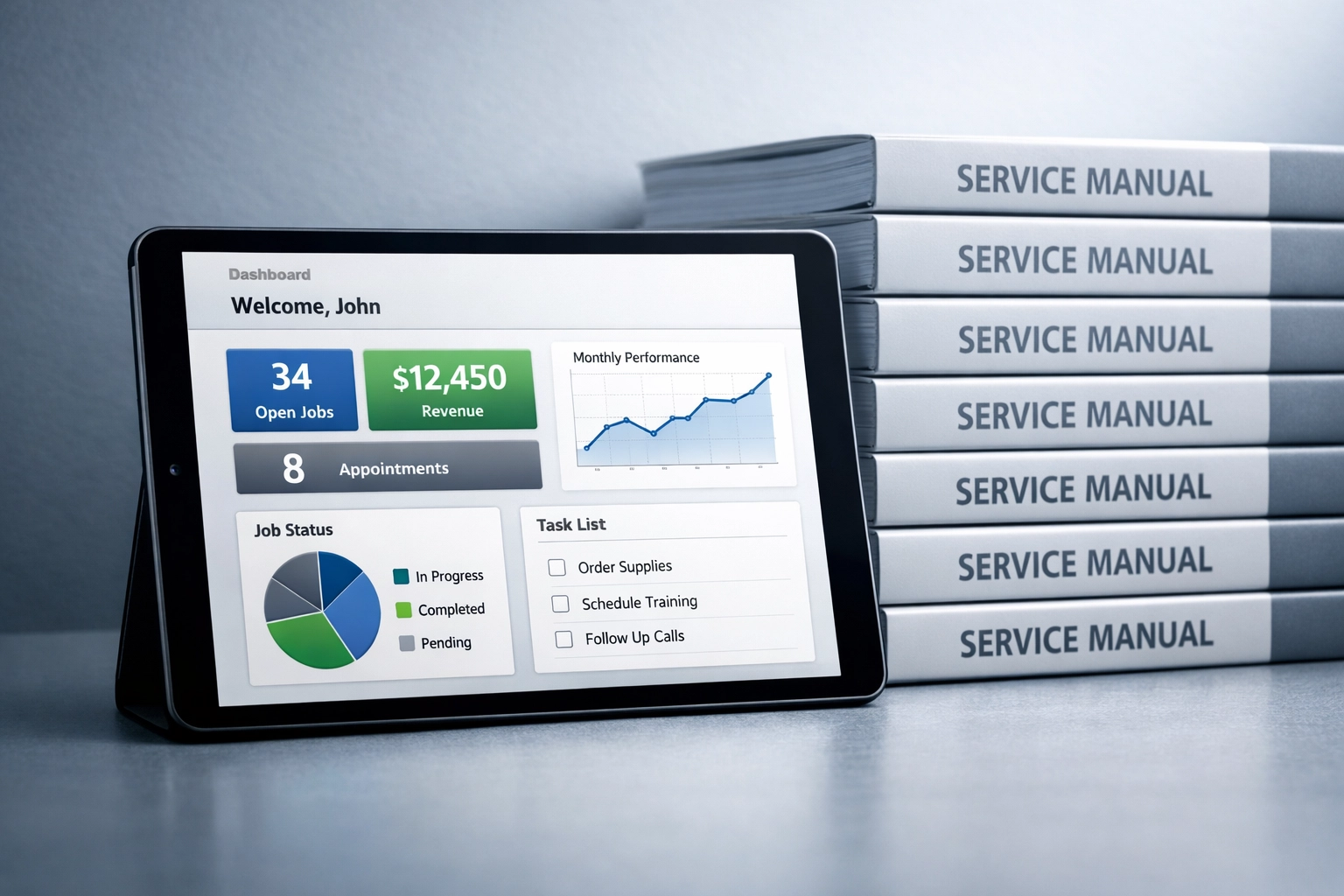
In a service-based business, your assets walk out the door every evening.
Your equipment: the vans, the tools, the inventory: is usually valued at fair market value (FMV). But that is rarely where the real value lies.
The real value is in:
- Recurring Revenue: Do you have maintenance contracts? A pest control franchise with 80% recurring revenue is worth significantly more than a disaster restoration franchise that relies on "one-off" emergency calls.
- Staff Longevity: Is your lead technician looking to retire the day you sell? Or do you have a team that has been with the brand for five years?
- The Customer Database: In the digital age, a clean, tagged, and marketed-to database of customers in Auburn or Montgomery is gold.
Most owners treat their database like a digital filing cabinet. Successful sellers treat it like a revenue engine. When a buyer sees a high "Life Time Value" (LTV) per customer, they stop haggling over the price of your old equipment.
The Discounted Cash Flow (DCF) Approach
While multiples are the standard for small to mid-sized franchises, larger multi-unit operations often use the income approach, specifically a Discounted Cash Flow analysis.
This involves projecting your future performance based on your current growth trajectory and then "discounting" those future dollars back to what they are worth today.
It is more complex. It requires cleaner books.
If you own three Gadsden territories and you’ve seen 15% year-over-year growth, the DCF method might yield a higher value than a simple multiple. It rewards the momentum you’ve built.
But it also exposes weaknesses. If your growth is slowing or your labor costs are rising faster than your prices, the DCF will reveal it.
The truth is always in the numbers. Not the numbers you tell your friends: the numbers you show the IRS.
The "Transfer Fee" and Other Friction Points
Every franchise has a transfer fee. Usually, it is between $5,000 and $25,000.
Most owners assume the buyer will pay this. In a seller's market, they might. But in many cases, it becomes a point of negotiation.
Then there is the training. The franchisor will require the new buyer to fly to corporate headquarters for two weeks of training. That is time the buyer isn't in the business.
And don't forget the "Right of First Refusal" (ROFR). Most franchise agreements give the franchisor the right to buy your business at whatever price you agree to with a third party.
It rarely happens, but it adds a layer of complexity. It can scare off some buyers who don't want to spend weeks on due diligence only to have the franchisor swoop in at the last second.
This is why preparation is not just about the math. It is about the legal landscape of your specific brand.
When Should You Value Your Business?
Most owners wait until they are burnt out. They wait until they have a health scare or they are simply "done."
That is the worst time to value a business.
You should have a professional valuation performed at least two years before you plan to sell.
Why? Because a valuation is a roadmap.
It shows you exactly which levers you need to pull to increase the price. If the valuation shows your margins are low compared to other Alabama service franchises, you have two years to fix your pricing or your labor costs.
If the valuation shows you are too "heavy" in the business, you have two years to hire a manager and prove the business can run without you.
Control over timing. Control over preparation. Control over the final exit.
That is how you win in the Alabama market.

Next Steps for Alabama Franchise Owners
You don't need a 50-page report to get started. You need clarity.
Whether you are looking at our services to help with a future exit or you are just curious about what the 2026 market looks like for your specific industry, the process is the same.
We look at the financials. We look at the franchise agreement. We look at the local Alabama market data.
And then we find the number.
The number doesn't have to feel heavy. It just has to be real.
If you're ready to see what your service-based franchise is actually worth in today's market, we can help you find that starting point.