


Most Alabama business owners start thinking about their exit strategy about 18 months before they want to sell.
That's not planning. That's scrambling.
And it shows in the numbers they get, the buyers they attract, and the stress they carry through what should be the culminating achievement of decades of work.
The question isn't whether you need an exit plan. You do. The question is when to start building one that actually protects your interests and maximizes the value you've spent years creating.
When to Actually Start Planning Your Exit
If you're serious about selling, start planning two to three years before you want to close.
That's the minimum timeline for doing this right.
But here's what most Alabama entrepreneurs don't realize: the businesses that command premium valuations and attract quality buyers start preparing five to ten years before exit.
Not because the owners are ready to sell. Because they're building businesses that someone else would want to buy.
There's a difference.
The first approach is reactive. You've decided to sell, so now you're getting things in order. The second is strategic. You're building transferable value into the business from day one, whether you sell in five years or fifteen.
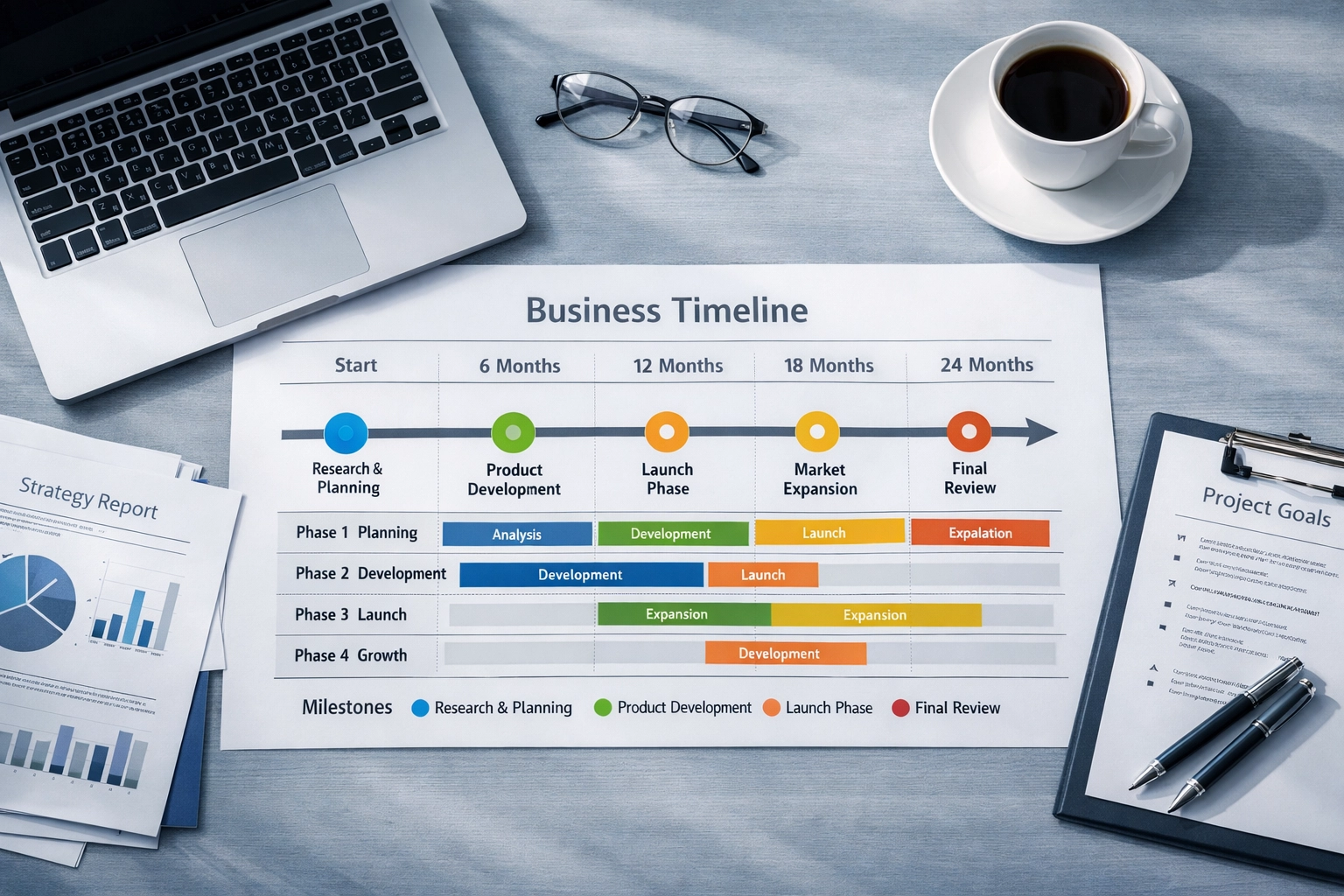
The 24-Month Framework (If You're Already Close)
If you're within two or three years of your target exit date, here's what the timeline looks like:
Months 1–6: Assessment and Foundation
Get a professional business valuation. Not a ballpark estimate from a friend who sold his business five years ago. A real valuation that accounts for your financials, your market position, and the current M&A environment in Alabama.
Define what success looks like. For you personally, not just financially. What happens after the sale? Where does that leave you?
Identify the gaps. Where does your business fall short of what buyers expect? Poor documentation? Revenue concentrated in three customers? Systems that only work when you're running them?
Months 7–12: Operational Cleanup
Document everything. Every process, every client relationship, every vendor agreement. If it lives in your head, it needs to live on paper.
Reduce owner dependency. Train your team to handle what you currently handle. Delegate the decisions you've been making for 20 years.
Clean up the financials. Separate personal and business expenses. Get your books audit-ready even if you don't plan to get audited.
Months 13–18: Market Preparation
Engage professionals. A business broker who knows the Alabama market, an M&A attorney who's closed deals in your industry, a CPA who understands the tax implications.
Build your marketing materials. The confidential information memorandum that tells your business's story without revealing your identity before you're ready.
Identify your ideal buyer profile. Who's the right fit? Strategic buyer? Private equity? Family succession?
Months 19–24: Execution
Market the business confidentially. You can't afford for employees, competitors, or customers to know you're selling before you're ready.
Qualify serious buyers. Not everyone who expresses interest can actually close. Financial capacity matters. Strategic fit matters more.
Navigate due diligence and close. This phase is intense. Plan on it consuming significant time and emotional energy.

The 10-Year Framework (If You're Building for the Long Term)
For those who have the luxury of time, the approach shifts from preparation to value creation.
7–10 Years Out: Foundation Building
Clarify where you want to end up. Not just financially, but personally. What's the next chapter?
Understand what drives value in your industry. Is it recurring revenue? Geographic footprint? Intellectual property? Workforce expertise?
Shore up weaknesses early. If your financials are inconsistent, fix that now. If your customer base is too concentrated, diversify now.
Implement real financial reporting systems. Monthly financial statements that give you visibility into what's actually driving profitability.
5–7 Years Out: Building Transferable Value
Strengthen the management team. Hire the people who can run the business without you. Empower them to actually do it.
Document and systematize operations. Create the playbook that allows someone new to step in and maintain what you've built.
Reduce key person risk. Whether that's you, a star salesperson, or a technical expert everyone depends on.
Track meaningful KPIs. Know your numbers cold. Buyers will.
3–5 Years Out: Market Readiness
Clean up the financial statements. Remove owner add-backs that won't transfer. Document the ones that will.
Consider getting reviewed or audited financials. It adds credibility and streamlines due diligence later.
Get a realistic valuation. Not what you hope the business is worth. What the market will actually pay.
1–3 Years Out: Strategic Execution
Choose your exit path. Each option: third-party sale, management buyout, family succession: requires different preparation.
Coordinate tax strategy with your advisors. The structure of the deal matters enormously.
Prepare for due diligence. Gather every document a buyer might request. Legal agreements, customer contracts, employee records, financial statements going back years.
Address operational gaps that could kill a deal. If there's something a buyer will object to, fix it now while you have leverage.
Why Waiting Costs You More Than Time
A rushed exit doesn't just feel chaotic. It costs money.
Buyers discount businesses that appear unprepared. Poor documentation signals operational risk. Incomplete financials suggest hidden problems. An owner who can't step back suggests the business won't survive the transition.
You lose negotiating leverage when you're in a hurry. Whether that urgency comes from health issues, partnership conflicts, or market timing, buyers sense it. And they adjust their offers accordingly.
The most profitable exits happen when the seller isn't desperate. When you can walk away if the terms aren't right. When you've built something valuable enough that multiple qualified buyers compete for it.
That optionality only exists when you've done the work early.

What This Looks Like in Alabama
Alabama has no shortage of solid, profitable businesses. What it has is a shortage of businesses positioned for clean exits.
I see manufacturing companies with strong margins but zero documentation. Service businesses with great customer relationships that don't transfer. Retail operations where the owner is the brand.
These businesses have value. But they're not sellable in their current state.
The Alabama M&A market rewards businesses that demonstrate transferable value. That means customers stay after you leave. Employees stay after you leave. Profitability continues after you leave.
Building that doesn't happen in 18 months.
Your Exit Path Options
Your timeline depends partly on which path you're taking:
Third-party sale is the most common exit and typically requires the longest preparation. You're selling to someone who doesn't know your business, your customers, or your market.
Management buyout can move faster if you have strong managers with financing access. But you still need clean financials and documented operations.
Family succession often takes longest because it involves training the next generation and managing family dynamics that affect business decisions.
ESOP transactions require significant legal and financial structuring but can provide tax advantages and workforce continuity.
Strategic sale to a competitor or consolidator may move quickly once you engage, but the preparation is the same.
Each path has different buyer expectations. All of them require preparation.
Where to Start Right Now
You don't have to have all the answers today. But you do need to start asking the right questions.
Get a valuation. Know what your business is worth today, not what you hope it's worth or what you need it to be worth.
Identify your gaps. Where does your business fall short of what buyers expect? Financial reporting? Documentation? Management depth? Customer concentration?
Choose your timeline. If you're five years from exit, you have time to build value strategically. If you're two years out, you need to move decisively.
Build your team. An experienced business broker who knows Alabama. A transaction attorney. A CPA who understands deal structure.
The businesses that sell well don't do it by accident. They do it through intentional preparation over a timeline that allows for building real, transferable value.
Most Alabama entrepreneurs I work with wish they'd started earlier. None of them wish they'd waited longer.
If you want clarity on where your business stands and what timeline makes sense for your situation, that's a conversation worth having now rather than later.
Because the best time to start preparing was five years ago. The second best time is today.
Ready to understand what your business is worth and what it would take to maximize that value? Visit us at Business Broker Alabama or schedule a confidential conversation.
We're part of the Vision Fox network, serving business owners throughout the Gulf Coast region: https://visionfox.com/ | https://visionfox.com/mobile-al/